

Why Automotive Website Optimization Increases Leads by 35%
- 2 days ago
- 10 min read

Many UK automotive businesses invest in websites that fail to convert visitors into quality leads. Generic optimization strategies ignore the specific needs of garages, dealerships, and service providers, resulting in poor rankings and low engagement. This guide outlines a proven workflow that addresses these challenges, combining technical SEO, local visibility tactics, and automotive industry tools to transform websites into effective lead generation engines.
Table of Contents
Key Takeaways
Point | Details |
Specialized optimization boosts leads | Automotive-focused workflows increase lead generation efficiency by 35% year over year. |
Mobile improvements cut drop-off | Responsive design and fast loading reduce user abandonment by 60%. |
Local SEO drives visibility | Targeted UK local strategies grow search presence by 50% within six months. |
Site speed impacts rankings | Pages loading under 3 seconds achieve 70% lower bounce rates and better organic positions. |
Continuous monitoring sustains gains | Regular analytics review and tool testing maximize ROI and maintain competitive advantage. |
Prerequisites: What You Need Before Starting Website Optimization
Before diving into optimization, UK automotive businesses must establish a solid foundation. Understanding automotive SEO basics provides context for why certain strategies work specifically for garages and dealerships. Without this knowledge, even well-executed tactics can miss the mark.
Access to analytics platforms like Google Analytics enables data-driven decisions rather than guesswork. These tools reveal exactly where visitors arrive, which pages convert, and where potential leads drop off. Conduct a thorough inventory of your current website content, noting outdated service descriptions, missing vehicle information, and weak calls to action.
Assess your technical framework too. Can your site support interactive features like booking systems or quote calculators? Planning for these automotive-specific tools now saves costly rebuilds later. Website building essentials cover integration requirements for advanced features.
Pro Tip: Define clear, measurable goals aligned with UK automotive market realities. Tracking specific metrics like quote requests, test drive bookings, or service appointments focuses optimization efforts where they matter most.
Key preparation steps include:
Establishing baseline analytics tracking for traffic sources and conversion paths
Documenting current website technical capabilities and limitations
Identifying competitor websites to benchmark performance standards
Allocating budget for tools, potential development work, and ongoing management
Setting realistic timelines based on resource availability and business priorities
Step 1: Conduct an Automotive-Specific Website Audit
A comprehensive audit reveals exactly where your website underperforms. Start by testing mobile usability and site speed using Google Web Vitals, as these directly impact both user experience and search rankings. Many UK automotive sites lose half their potential leads simply because pages load too slowly or display poorly on smartphones.
Check whether your site uses structured data markup for vehicle inventory, service offerings, and business information. Ignoring structured data markup on automotive websites reduces chances of appearing in rich search results, lowering traffic by 15 to 20%. This markup helps search engines understand your content and display enhanced snippets that attract more clicks.
Evaluate your current lead generation tools critically. Do visitors easily find booking forms? Can they request quotes without navigating through multiple pages? Map the complete user journey from landing page to conversion action, identifying every friction point. Review your Google My Business profile status and local citation consistency across directories.

Optimise automotive SEO strategies require understanding local search factors that matter most for UK garages. This audit establishes priorities based on impact potential rather than ease of implementation.
Key audit areas:
Core Web Vitals scores for mobile and desktop performance
Presence and accuracy of automotive schema markup
Lead capture form placement, simplicity, and mobile functionality
Local SEO elements including NAP consistency and review profiles
Competitor analysis of top-ranking automotive sites in your region
Document findings with specific metrics. Rather than noting “site is slow,” record “homepage loads in 6.2 seconds on 4G mobile.” Precise data guides effective fixes. Explore automotive marketing tips for industry benchmarks, and review automotive web design examples showing optimized layouts.
Step 2: Implement Technical and On-Page SEO Improvements
With audit insights, tackle technical and content optimizations systematically. Site speed improvements deliver immediate returns. Websites with fast loading times under 3 seconds have 70% lower bounce rates and rank higher in organic search results. Compress images, enable browser caching, minimize CSS and JavaScript files, and consider a content delivery network for UK users.
Add automotive-specific structured data to vehicle listings, service pages, and business profiles. This markup increases visibility in search results through rich snippets showing prices, availability, and ratings. Implementation requires technical knowledge but pays dividends through higher click-through rates.
Optimize meta titles and descriptions with UK local keywords that match how customers search. Rather than generic “Car Repairs,” use “MOT and Car Servicing in Manchester City Centre.” Each page needs unique, compelling metadata that accurately describes content while incorporating search terms.
Pro Tip: Test every optimization on mobile devices first. Over 65% of automotive searches now happen on smartphones, making mobile performance the priority rather than an afterthought.
Ensure full responsive design across all device types. Pages must adapt layouts, not just shrink desktop versions. Navigation should work with thumbs, not mouse pointers. Forms need large tap targets and minimal required fields.
Implementation checklist:
Achieve Core Web Vitals scores in “good” range for all pages
Deploy schema markup for LocalBusiness, AutoDealer, or AutoRepair as appropriate
Rewrite meta titles to 50 to 60 characters including location and service keywords
Create unique meta descriptions for every service and location page
Verify mobile usability through Google Search Console reports
Regularly update on-page elements as UK market trends shift. What works for searches today may need adjustment as customer behavior evolves. Technical SEO improvements require ongoing attention, not one-time fixes.
Step 3: Integrate Advanced Automotive Lead Generation Tools
Interactive tools transform passive browsers into active leads. Deploy 3D car configurators that let UK customers visualize vehicles with their preferred colors, wheels, and options before visiting your showroom. These configurators increase engagement time by 300% compared to static image galleries, keeping visitors on your site longer.
Implement instant quote generators for services, repairs, or vehicle purchases. Customers want pricing information immediately, not after filling out contact forms and waiting for callbacks. Transparent, automated quotes build trust and capture leads ready to move forward.
Add appointment booking systems that sync with your actual availability. Eliminate phone tag by letting customers schedule test drives, service appointments, or consultations directly through your website. Integration with calendar systems prevents double-bookings and reduces administrative overhead.
Follow this implementation sequence:
Research tools compatible with your website platform and budget constraints
Pilot test one tool with a small customer segment before full rollout
Monitor completion rates and identify where users abandon processes
Refine forms, reduce required fields, and simplify navigation based on data
Train staff to follow up promptly on leads generated through new tools
Analytics reveal which tools convert best for your specific audience. Some garages find booking systems drive most leads, while dealerships see better results from configurators. Test, measure, and optimize based on your data, not industry assumptions. These tools increase lead conversion rates by 30 to 40% on average when properly implemented. Lead generation tools integration guides cover technical setup and optimization strategies.
Step 4: Optimize Local SEO and Paid Advertising Integration
Local visibility determines success for most UK automotive businesses. Claim and fully optimize your Google My Business profile with accurate hours, services, photos, and regular posts. Complete profiles rank higher in local map packs, capturing customers searching for nearby solutions.
Incorporate UK local keywords naturally throughout website content. Each service page should mention specific towns, neighborhoods, or regions you serve. Create dedicated location pages if you operate multiple sites or serve distinct areas within a city.
Paid advertising complements organic local SEO by capturing high-intent searches immediately. Google Ads campaigns targeting location-specific automotive keywords deliver qualified traffic while your organic rankings improve. Facebook Ads reach local audiences based on demographics, interests, and behaviors beyond search intent.
Strategy | Timeline to Results | Cost Structure | Best For |
Organic Local SEO | 8 to 12 weeks | Time investment, content creation | Long-term sustainable traffic |
Google Ads | Immediate | Pay per click, ongoing budget | Quick lead generation, seasonal promotions |
Facebook Ads | 2 to 4 weeks | Pay per impression/click | Brand awareness, remarketing to site visitors |
Monitor ROI metrics religiously. Track cost per lead, conversion rates, and customer lifetime value for each channel. Adjust budgets toward highest-performing campaigns while pausing or refining underperformers. Many businesses waste 30 to 40% of advertising spend on poorly targeted or unmonitored campaigns.
Local SEO strategies require consistent execution across multiple platforms. Update Google My Business weekly with posts, photos, and offers. Encourage satisfied customers to leave reviews and respond professionally to all feedback, positive or negative.
Key optimization actions:
Audit and update all online directory listings for NAP consistency
Create location-specific content answering common customer questions
Develop targeted ad campaigns for high-value services with strong margins
Implement conversion tracking to measure exact lead sources and costs
Test different ad creative, headlines, and landing pages systematically
Step 5: Monitor, Analyze, and Continuously Optimize
Optimization never ends. Review analytics weekly to spot trends, issues, and opportunities before they significantly impact performance. Watch bounce rates closely; sudden increases signal problems with content relevance, page speed, or user experience that need immediate attention.
Track session duration and pages per visit to understand engagement levels. Visitors who browse multiple pages and spend several minutes demonstrate genuine interest, making them more valuable than high-volume but disengaged traffic. Businesses that integrate analytics tools to monitor user behavior and conversions improve their website’s lead generation efficiency by 35% year over year.
Identify and fix usability or technical issues promptly. Broken forms, error pages, or slow-loading elements cost leads every day they persist. Set up automated alerts for critical metrics so you catch problems before losing significant revenue.
Test new SEO tactics and lead tools quarterly based on industry developments and customer feedback. What worked last year may underperform as search algorithms evolve and user expectations change. Experimentation keeps your website competitive and prevents stagnation.
Monitoring priorities:
Weekly review of traffic sources, top landing pages, and conversion funnels
Monthly analysis of keyword rankings and organic search visibility trends
Quarterly assessment of lead quality, cost per acquisition, and customer value
Regular technical audits to catch emerging issues with speed, mobile, or errors
Competitive benchmarking to ensure you maintain advantages in local market
Report key performance indicators to stakeholders monthly. Document lead quality improvements, traffic growth, and ROI from optimization investments. Clear reporting builds support for continued optimization budgets and strategic initiatives. Continuous refinement based on analytics for lead generation delivers compounding returns over time.
Common Mistakes and Troubleshooting in Automotive Website Optimization
Avoiding frequent errors accelerates results and prevents wasted resources. Neglecting mobile usability causes about 60% of UK users to leave automotive sites immediately. Fix this by implementing responsive design, testing on actual devices, and prioritizing mobile user experience over desktop aesthetics.
Skipping structured data markup reduces traffic by up to 20% because search engines cannot properly categorize and display your content in rich results. Implement automotive schema for vehicles, services, reviews, and business information to capture this lost visibility.
Overinvesting in flashy features without measuring ROI wastes budgets on tools that look impressive but generate few leads. Focus resources on proven conversion drivers like simplified quote forms, clear calls to action, and fast page loads before adding complex features.
Failing to update local SEO listings causes missed opportunities when customers search for nearby automotive services. Set quarterly reviews of Google My Business, industry directories, and citation sources to maintain accuracy. Inconsistent business information confuses search engines and customers alike.
Common troubleshooting scenarios:
High traffic but low conversions indicates targeting mismatch or poor user experience once visitors arrive
Good rankings but minimal traffic suggests targeting wrong keywords with low search volume
Strong mobile traffic but high bounce rates points to mobile-specific usability problems
Leads submitting forms but not converting to customers signals lead quality issues or poor follow-up processes
Declining rankings after optimization often results from technical errors or search algorithm updates requiring adjustments
Avoiding website mistakes starts with understanding how automotive customers behave differently than other industries. They research extensively, compare multiple businesses, and expect immediate information about availability and pricing.
Expected Results: Timelines, Benchmarks, and Success Metrics
Realistic expectations prevent frustration and guide resource allocation. Search ranking improvements generally appear within 8 to 12 weeks after optimization starts, though competitive keywords may take longer. Initial gains come from technical fixes and low-competition terms before broader visibility develops.
Lead conversion rates typically increase by 30 to 40% post lead tool integration as friction points disappear and customers find easier paths to contact you. This improvement happens faster than ranking changes because it depends on user experience rather than search algorithm responses.
Bounce rates can reduce by up to 25% while session duration increases by 20% within 3 months of implementing speed and usability improvements. These engagement metrics signal both better user experience and stronger relevance to search intent, creating positive ranking feedback loops.
Local search visibility often grows by 50% within six months of consistent local SEO optimization. This dramatic improvement reflects the relatively weak competition in many local automotive markets where even basic optimization creates significant advantages.
Metric | Baseline | 3 Months | 6 Months | 12 Months |
Organic Traffic | 100% | +25% | +50% | +100% |
Lead Conversion Rate | 2.5% | 3.3% | 3.8% | 4.2% |
Average Session Duration | 1:45 | 2:15 | 2:30 | 2:45 |
Local Pack Visibility | 15% | 35% | 55% | 70% |
Bounce Rate | 65% | 52% | 48% | 42% |
These benchmarks assume consistent optimization effort and adequate budgets for tools and content. Results vary based on competition intensity, starting position, and implementation quality. Track your specific metrics against your own baseline rather than industry averages for accurate progress assessment.
Optimize Your Automotive Website with SADJE’s Expert Solutions
Transforming automotive websites into lead generation engines requires specialized expertise and industry-specific tools. SADJE partners with UK garages, dealerships, and service providers to deliver bespoke optimization combining technical excellence with automotive market knowledge.
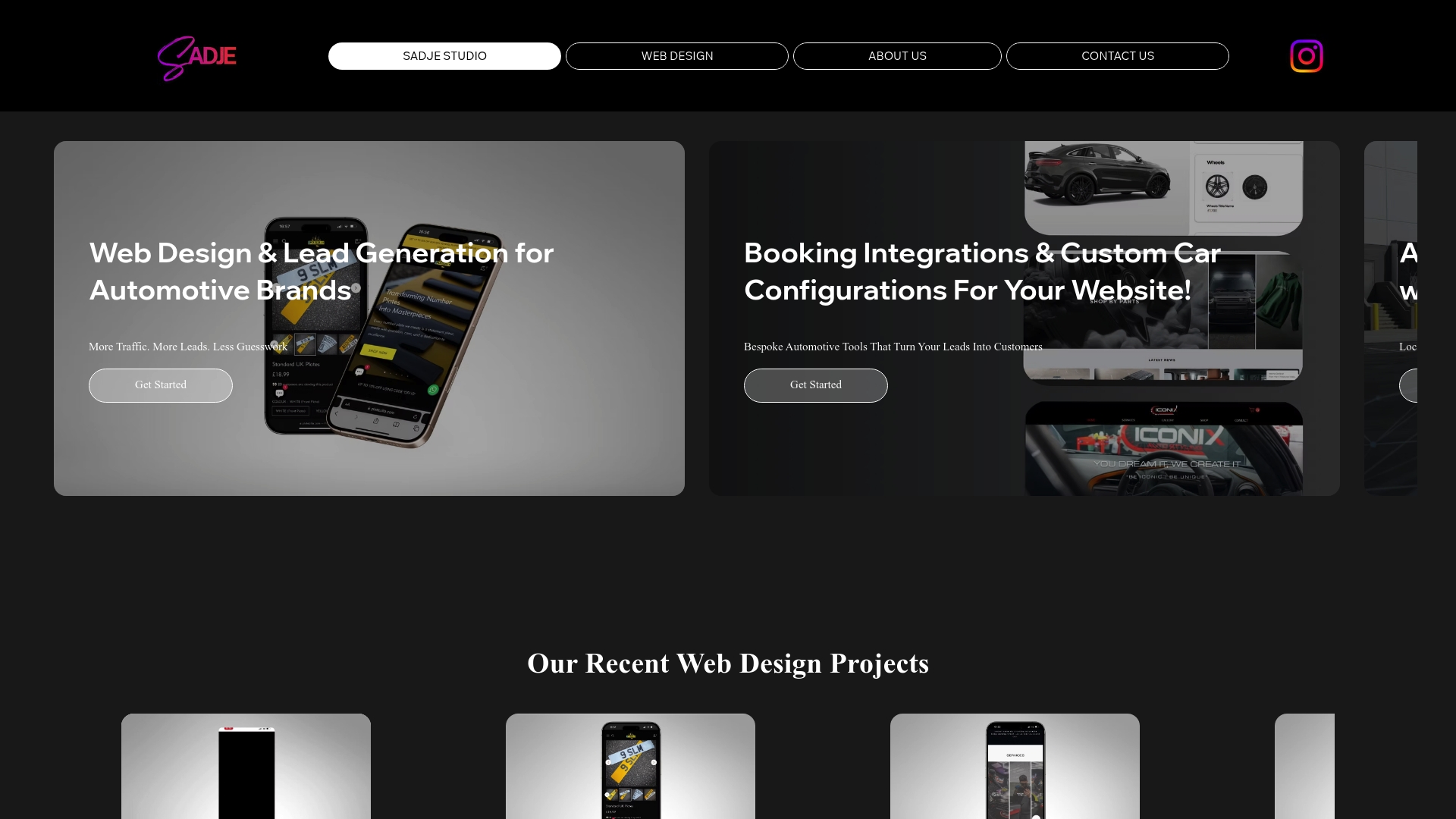
Our automotive web design services integrate 3D configurators, booking systems, and instant quote generators proven to increase conversions. We implement advanced automotive web design strategies alongside local SEO and paid advertising management to maximize visibility and ROI. Explore our proven automotive SEO workflows to accelerate your digital growth and capture more qualified leads ready to become customers.
FAQ
What are the essential tools for starting automotive website optimization?
Google Analytics provides critical traffic and conversion data. Automotive-specific configurators and booking systems capture leads effectively. SEO keyword research tools identify search terms your customers actually use, ensuring content targets real demand rather than assumptions.
How long does it take to see results from website optimization?
Most businesses observe measurable ranking improvements between 8 to 12 weeks after starting optimization. Lead generation enhancements from improved user experience appear faster, often within 4 to 6 weeks. Sustained growth accelerates over 6 to 12 months as cumulative improvements compound.
Which common mistakes should automotive businesses avoid during optimization?
Neglecting mobile usability and structured data markup represent the costliest errors, each reducing potential traffic by 20% or more. Regular testing on actual mobile devices and implementing automotive schema fixes these issues. Skipping analytics tracking wastes optimization budgets by preventing data-driven decisions.
Can small garages optimize their websites effectively on a limited budget?
Absolutely. Focus on SEO fundamentals like fast loading speeds, mobile responsiveness, and accurate local listings delivers substantial results without large investments. Simple lead capture forms and optimized Google My Business profiles generate quality leads. Prioritize high-impact, low-cost improvements before considering expensive tools or extensive advertising campaigns.
Recommended
Comments