

How to Build Automotive Website for More Leads
- Feb 25
- 7 min read

Getting more enquiries online can feel out of reach for many British automotive service providers and dealerships. An effective website is not just a digital brochure, but a smart tool that works for your business. With the right approach, you can turn visitors into valuable leads by focusing on clear objectives, powerful features, and professional branding. This guide shows how to build a tailored website that meets customer expectations and maximises your potential for growth.
Table of Contents
Quick Summary
Key Takeaway | Explanation |
1. Define clear website objectives | Establish specific goals to ensure your website effectively captures leads and showcases services. |
2. Choose the right platform | Assess various platforms to find one that aligns with your business needs for optimal performance. |
3. Focus on responsive design | Create a layout that adapts to any device for better user experience and engagement. |
4. Integrate lead-generation tools | Implement booking and enquiry systems to facilitate seamless customer interactions and conversions. |
5. Conduct regular functionality tests | Regularly evaluate site performance and SEO to maintain visibility and user satisfaction. |
Step 1: Define your website objectives and features
Building an effective automotive website begins with crystal-clear objectives that transform your digital presence from a mere online brochure to a powerful lead generation machine. Your website must do more than look good - it needs to work strategically for your business.
Start by identifying your primary goals, which typically include:
Showcasing automotive services
Capturing potential customer contact information
Providing detailed vehicle inventory
Enabling online bookings and enquiries
Demonstrating professional credibility
To achieve these objectives, you’ll need specific features that make your website both functional and compelling. Defining clear website objectives involves understanding exactly what actions you want visitors to take. For automotive businesses, this might mean creating intuitive contact forms, integrating booking systems, and developing responsive design that works seamlessly across mobile and desktop platforms.
A website without clear objectives is like a car without a destination - it might look impressive, but it won’t get you anywhere meaningful.
Key features to consider implementing include:
Comprehensive service descriptions
Interactive vehicle inventory showcase
Instant quote generator
Mobile-responsive design
Customer testimonial section
Easy-to-use contact and booking forms
Pro tip: Select website features that directly align with your specific automotive business model and customer expectations.
Step 2: Select the right platform and hosting
Selecting the appropriate website platform and hosting solution is critical for creating a robust automotive digital presence that attracts and converts potential customers. Your choice will impact everything from website performance to user experience and lead generation potential.
When evaluating platforms, you’ll want to consider several key factors. Choosing the right hosting platform requires careful analysis of your specific automotive business needs. Popular options include:
WordPress: Highly flexible with numerous automotive themes
Squarespace: Beautiful design-focused templates
Wix: User-friendly drag-and-drop interface
Custom development: Maximum flexibility and unique functionality
Your hosting requirements will depend on several critical considerations:
Expected website traffic volume
Performance and loading speed
Security features
Scalability potential
Budget constraints
Technical support availability
The right platform is like choosing the perfect vehicle - it must match your specific journey and performance requirements.
For automotive websites, prioritise platforms offering:
Easy inventory management
Mobile responsiveness
SEO optimisation tools
Integration with booking systems
Customer relationship management (CRM) compatibility
Pro tip: Compare platform features meticulously and consider potential future growth when making your initial selection.
Here is a comparison of popular website platforms for automotive businesses:
Platform | Flexibility | Design Focus | Ease of Use |
WordPress | Highly customisable | Theme-driven visual | Moderate: learning required |
Squarespace | Moderate flexibility | Aesthetic templates | Intuitive drag-and-drop |
Wix | Basic custom choices | Visual emphasis | Beginner-friendly editor |
Custom build | Maximum functionality | Tailored branding | Requires developer expertise |
Step 3: Design for automotive performance and branding
Crafting an exceptional automotive website requires a strategic approach to design that balances visual appeal with exceptional performance. Your website’s design is the digital showroom that represents your brand, making every pixel count in attracting and converting potential customers.
Web performance optimization is crucial for creating a seamless user experience that keeps visitors engaged. This means developing a design that loads quickly, looks stunning, and functions smoothly across all devices.
Key design elements to focus on include:
Responsive layout that adapts to different screen sizes
High-quality imagery of vehicles and services
Clean, intuitive navigation
Consistent colour scheme reflecting your brand identity
Fast-loading page elements
Mobile-first design approach
Your website’s design should communicate your automotive brand’s personality faster than a sports car accelerates from zero to sixty.
Branding considerations for automotive websites involve more than just aesthetics:
Use a colour palette that matches your brand’s personality
Incorporate your logo prominently
Develop a consistent visual language
Ensure typography reflects your brand’s character
Create a visual hierarchy that guides user attention
Pro tip: Invest time in creating a design that tells your automotive business’s unique story visually and emotionally.
Step 4: Integrate lead-generation and booking tools
Transforming your automotive website into a powerful lead-generation machine requires strategic implementation of intelligent booking and enquiry tools. These digital solutions will bridge the gap between online visitors and your actual business services, creating seamless customer interactions.
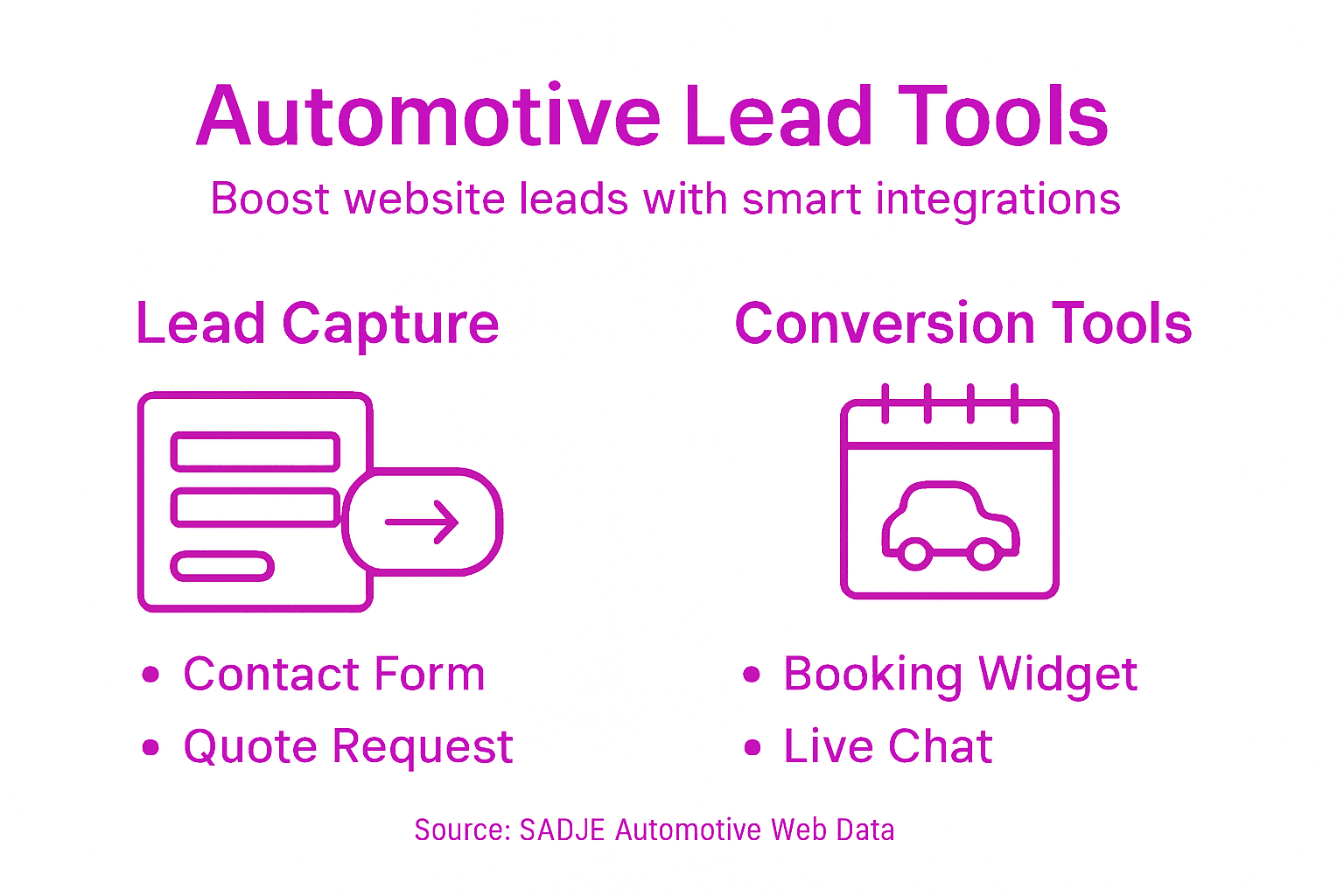
Automotive CRM systems are crucial for capturing and managing potential customer leads effectively. By integrating smart tools, you can streamline the entire customer journey from initial website visit to confirmed booking.
Essential lead-generation tools for automotive websites include:
Online booking calendars
Instant quote generators
Vehicle configuration interfaces
Test drive scheduling systems
Interactive contact forms
Live chat support
The right digital tools can transform website visitors into genuine sales opportunities faster than a high-performance engine accelerates.
Key implementation strategies involve:
Select user-friendly booking platforms
Ensure mobile responsiveness
Create intuitive navigation
Integrate with existing customer management systems
Implement clear call-to-action buttons
Pro tip: Design your lead-generation tools to feel like a natural extension of your customer’s research and purchasing journey.
Step 5: Test functionality and SEO for results
Ensuring your automotive website performs flawlessly is the final critical step in creating a powerful digital platform that attracts and converts potential customers. Your website must not just look impressive, but function seamlessly across all devices and search platforms.
Comprehensive SEO audits are essential for identifying and resolving potential performance issues before they impact your online visibility. These systematic evaluations help pinpoint areas for improvement and ensure your website meets the highest digital standards.
Key testing areas to focus on include:
Mobile responsiveness
Page loading speed
Cross-browser compatibility
Form functionality
Navigation integrity
Search engine indexing
A meticulously tested website is your digital showroom - it must run as smoothly as a precision-engineered automotive engine.
Prioritise these testing strategies:
Use multiple device types for comprehensive testing
Check all interactive elements thoroughly
Validate metadata and content accuracy
Test booking and enquiry systems
Review website security protocols
Pro tip: Conduct regular monthly performance audits to maintain your website’s competitive edge and user experience.
Use this table to quickly reference essential website testing priorities:
Test Area | Purpose | Business Benefit |
Mobile responsiveness | Consistent user experience | Greater reach and satisfaction |
Page loading speed | Fast, smooth interactions | Improves conversion rates |
Cross-browser check | Compatibility assurance | Reduces loss of potential leads |
Form functionality | Reliable lead capture | Prevents missed opportunities |
Unlock Your Automotive Website’s Full Lead-Generation Potential
Building a high-performance automotive website that not only looks professional but also converts visitors into valuable leads is a challenge many businesses face. As the article highlights, integrating features like instant quote generators, online booking systems, and mobile-responsive design is essential — yet implementing these tools effectively to elevate your digital showroom requires expert guidance and tailored solutions.
At SADJE, we specialise in crafting bespoke websites that match your unique automotive business needs. From advanced 3D configurators to seamless booking platforms, our UK-based agency ensures your site captures and nurtures quality leads while enhancing your local visibility through focused SEO and paid advertising strategies. Discover how our proven approach aligns perfectly with the goal to generate more enquiries and boost your online professionalism by visiting SADJE’s website.
Take the next step towards driving measurable growth with a website designed for your success. Explore our tailored automotive web development services now at SADJE landing page and learn why industry leaders trust us to build scalable digital solutions that deliver results.
Frequently Asked Questions
How can I define clear objectives for my automotive website?
To define clear objectives, identify what you want your website to achieve, such as capturing leads or showcasing services. Start by listing your primary goals and selecting features that align with these objectives, like intuitive forms and online booking options.
What platform should I choose for building an automotive website?
Select a platform that meets your automotive business needs and offers required functionalities, such as WordPress for flexibility or Squarespace for design-focused templates. Assess your budget, expected traffic, and desired features before making a decision to ensure optimal performance.
How can I optimise the design of my automotive website for better lead generation?
Focus on creating a responsive design that is visually appealing and user-friendly. Incorporate high-quality images, easy navigation, and clear calls to action to guide potential customers and encourage them to reach out or book services.
What tools should I incorporate for lead generation on my automotive website?
Integrate online booking calendars, instant quote generators, and interactive contact forms to streamline customer interaction. Ensure that these tools are mobile-responsive and user-friendly to facilitate seamless lead capture.
How do I test the functionality of my automotive website?
Conduct comprehensive tests on mobile responsiveness, page loading speed, and compatibility across multiple browsers. Regularly verify that all forms and booking systems function correctly to ensure a smooth user experience and maintain lead generation effectiveness.
How often should I perform website performance audits?
Perform website performance audits at least once a month to identify and resolve potential issues. This practice helps maintain your website’s competitive edge and improves user satisfaction while maximising lead capture potential.
Recommended
A former colleague pointed me toward vodds casino right after we wrapped up a massive, multi-month project at work that had completely drained my energy. One night, pacing the floor and unable to shut my brain off, I decided to check it out on my laptop. The platform is remarkably sleek and unobtrusive, a huge contrast to the chaotic digital clutter I deal with all day. I poured myself a glass of water, settled onto the couch after a long-overdue pamper session, and finally felt the heavy tension leave my shoulders.
A really insightful and practical post — building an automotive website that actually generates leads is especially important for businesses across the UK, where most customers now begin their journey online. With buyers spending hours researching before making contact, having a fast, mobile-friendly, and easy-to-navigate site is essential for capturing that initial interest and turning it into real enquiries . Clear calls-to-action, simple forms, and integrated tools like booking systems or live chat can make a huge difference in converting visitors into leads and guiding them through the process . That kind of structured, consistent approach to improving performance, sometimes loosely described in different contexts with phrases like atlantic spins, really highlights how ongoing optimisation and attention to user experience…