

Workflow for Automotive SEO: Boost Car Dealership Leads
- Feb 19
- 7 min read

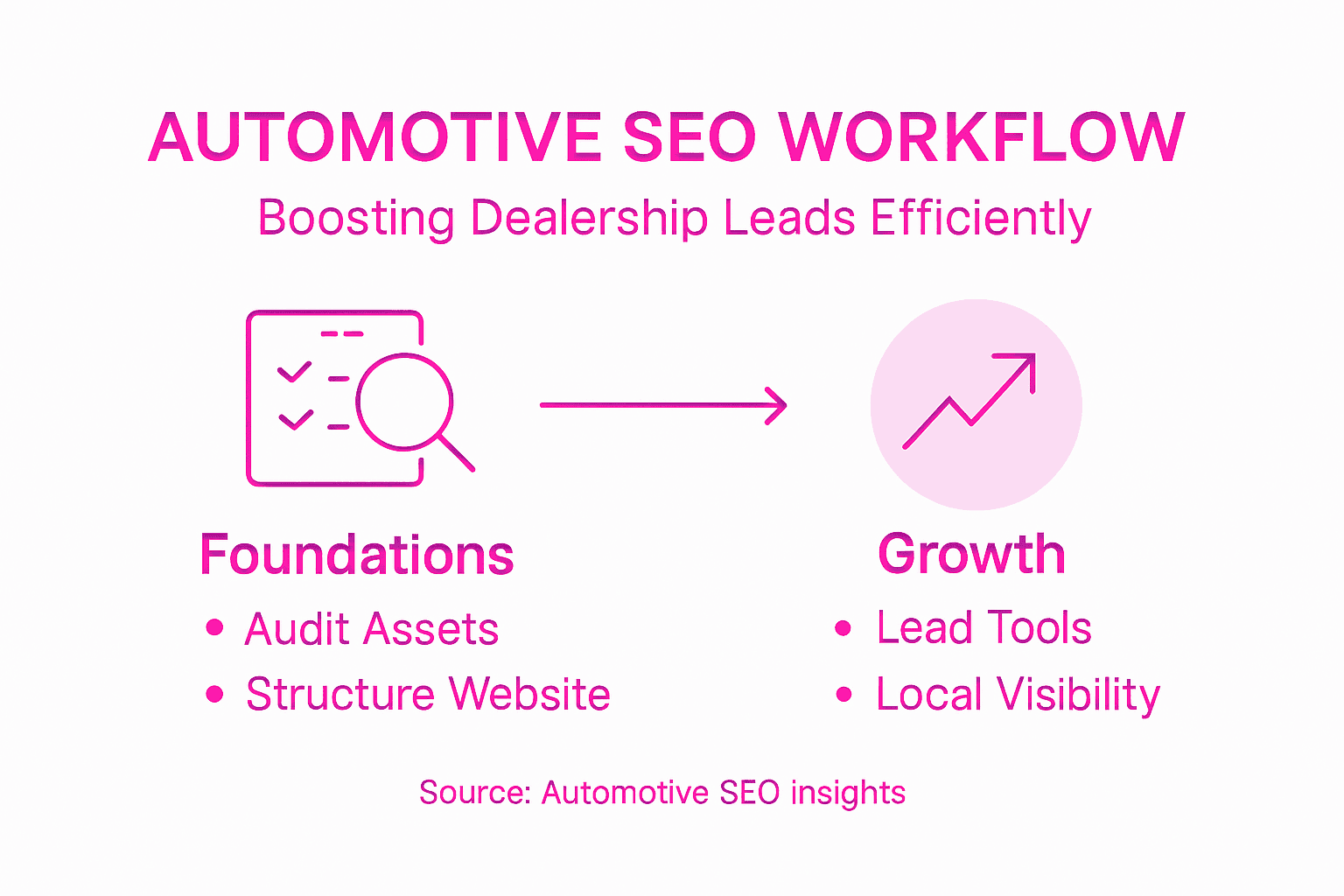
Every dealership knows that first impressions online shape customer decisions long before anyone steps onto the forecourt. The challenge lies in bringing those digital assets together for a clear, competitive edge. By focusing on a thorough digital presence audit, you uncover powerful insights that directly influence how drivers in the United Kingdom engage with your brand. This guide highlights smart, comprehensive digital footprint assessment tactics to sharpen local visibility and attract high-quality leads.
Table of Contents
Quick Summary
Key Point | Explanation |
1. Audit Digital Presence | Conduct a comprehensive review of all digital assets to identify strengths and weaknesses in your online performance. |
2. Optimise Website Structure | Create a user-friendly website architecture that enhances both search engine visibility and customer navigation. |
3. Implement Advanced Lead Tools | Use interactive lead-generation solutions to streamline customer engagement and capture valuable information. |
4. Enhance Local Visibility | Focus your marketing strategies on local SEO to attract customers in your geographical area and improve local search rankings. |
5. Monitor and Refine SEO | Regularly track performance metrics and adjust strategies to ensure continued improvement and relevance in digital marketing. |
Step 1: Audit current digital presence and assets
An automotive digital presence audit provides a comprehensive snapshot of your dealership’s online performance and positioning. By systematically reviewing your digital assets, you’ll uncover critical insights that can transform your marketing strategy and lead generation potential.
Begin by conducting a thorough website health assessment across multiple dimensions. Your audit should encompass several key areas:
Technical infrastructure evaluation
Content quality analysis
SEO performance review
User experience examination
Security status check
Start by gathering all existing digital assets, including your primary website, social media profiles, Google Business listing, and any microsites or landing pages. Document each platform’s current state, performance metrics, and engagement rates. Pay special attention to website loading speeds, mobile responsiveness, and search engine indexing.
Here is a summary of key digital audit focus areas and their business impact:
Audit Area | Why It Matters | Common Issues Identified |
Technical Infrastructure | Keeps site stable and fast | Slow servers, broken links |
Content Quality | Builds trust with visitors | Outdated or shallow content |
SEO Performance | Improves search ranking | Poor keywords, missing tags |
User Experience | Increases engagement | Confusing menus, bad design |
Security Status | Protects data and reputation | No SSL, weak passwords |
For a comprehensive digital footprint assessment, benchmark your online presence against local competitors. Analyse your digital channels systematically, comparing visibility, content quality, and audience engagement across platforms.
Professional recommendation: Invest in professional analytics tools that provide detailed insights beyond surface-level metrics, enabling a granular understanding of your digital ecosystem.
Step 2: Optimise website structure for automotive SEO
Optimising your automotive website’s structure is crucial for improving search engine visibility and user experience. By strategically organising your digital content, you’ll create a more intuitive navigation system that helps potential customers find exactly what they need while signalling your site’s relevance to search engines.
Begin by implementing a clear, hierarchical website architecture that reflects how car buyers search for vehicles. Your site structure should include:
Logical category pages for vehicle types
Comprehensive model landing pages
Clear navigation menus
Descriptive URL structures
Internal linking pathways
Focus on creating semantic HTML markup that helps search engines understand your content’s context. This means using appropriate heading tags (H1, H2, H3), implementing schema markup for vehicles, and ensuring each page has a clear, descriptive title that includes relevant keywords.

Prioritise mobile-responsive design with automotive web design principles that adapt seamlessly across different devices. Implement structured data to help search engines quickly interpret your dealership’s inventory, pricing, and availability.
Professional recommendation: Conduct regular technical SEO audits to identify and resolve any structural issues that might impede your website’s search performance and user experience.
Step 3: Implement advanced lead-generation tools
Advanced lead-generation tools are the powerhouse of modern automotive digital marketing, transforming casual website visitors into potential customers. By strategically integrating intelligent digital solutions, you’ll create a seamless pathway for prospective car buyers to engage with your dealership.
Start by implementing lead generation strategies that capture customer interest through interactive digital touchpoints. Your toolkit should include:
Online appointment scheduling systems
Trade-in value calculators
Interactive vehicle comparison tools
Personalised e-brochure generators
Instant quote request forms
Each tool must be designed to reduce friction in the customer journey, making it effortless for potential buyers to interact with your dealership. Integrate these tools with your customer relationship management (CRM) system to track lead behaviour, prioritise follow-ups, and create personalised communication strategies.
Consider embedding dynamic features like real-time inventory checks, financing calculators, and personalised vehicle recommendation engines that adapt to individual user preferences and browsing history.
Compare basic vs. advanced lead-generation tools for dealerships:
Tool Level | Example Feature | Customer Benefit |
Basic | Contact forms | Simple initial enquiry |
Advanced | Trade-in calculator, live quotes | Instant valuation, higher engagement |
Advanced | Personalised e-brochure | Customised information delivery |
Professional recommendation: Implement analytics tracking for each lead-generation tool to continuously refine and optimise your digital conversion strategies.
Step 4: Enhance local visibility with targeted strategies
Local visibility is the cornerstone of successful automotive digital marketing, connecting your dealership directly with potential customers in your immediate geographical area. By implementing hyper-targeted strategies, you’ll transform your online presence into a powerful local lead-generation machine.
Begin by optimising your car shop advertising approach with precision-focused local marketing techniques. Your local visibility strategy should encompass:
Google Business Profile optimisation
Localised keyword targeting
Geographically specific content creation
Local link-building initiatives
Hyperlocal social media engagement
Focus on creating hyperlocal content that speaks directly to your community’s automotive needs. This means developing location-specific landing pages, crafting neighbourhood-relevant blog posts, and highlighting local customer success stories that resonate with regional audiences.
Ensure your digital footprint includes detailed, consistent business information across all online platforms. This includes maintaining identical name, address, and phone number (NAP) details across directory listings, social media profiles, and your primary website.
Professional recommendation: Invest time in generating genuine local customer reviews, as they significantly boost your dealership’s local search credibility and attract more geographically targeted leads.
Step 5: Monitor results and refine SEO workflow
Continuous monitoring and strategic refinement are the keys to maintaining a high-performing automotive digital marketing strategy. By implementing a robust tracking and analysis system, you’ll transform raw data into actionable insights that drive your dealership’s online success.
Establish a comprehensive performance tracking framework that integrates multiple analytical tools. Focus on monitoring key performance indicators (KPIs) such as:
Website traffic volume
Conversion rates
Keyword ranking progression
Lead generation metrics
User engagement statistics
Utilise advanced analytics platforms to deep dive into user behaviour and identify potential optimisation opportunities. This means tracking not just overall performance, but understanding the granular details of how potential customers interact with your digital platforms.
Consistent measurement creates continuous improvement. Track, analyse, adapt.
Consider implementing quarterly SEO workflow reviews to ensure your strategies remain responsive to changing digital landscapes and customer preferences. This proactive approach allows you to quickly pivot and refine your digital marketing tactics.
Professional recommendation: Set up automated monthly reporting to maintain a consistent, data-driven approach to your SEO and digital marketing strategies.
Elevate Your Dealership’s Digital Presence with SADJE
Struggling to convert website visitors into quality leads despite a solid digital foundation? This article highlights the crucial steps of auditing your automotive SEO workflow, optimising site structure, and deploying advanced lead-generation tools to boost dealership lead flow. If technical issues, poor local visibility, or ineffective digital tools are holding you back, SADJE offers tailored solutions crafted exclusively for the automotive sector.
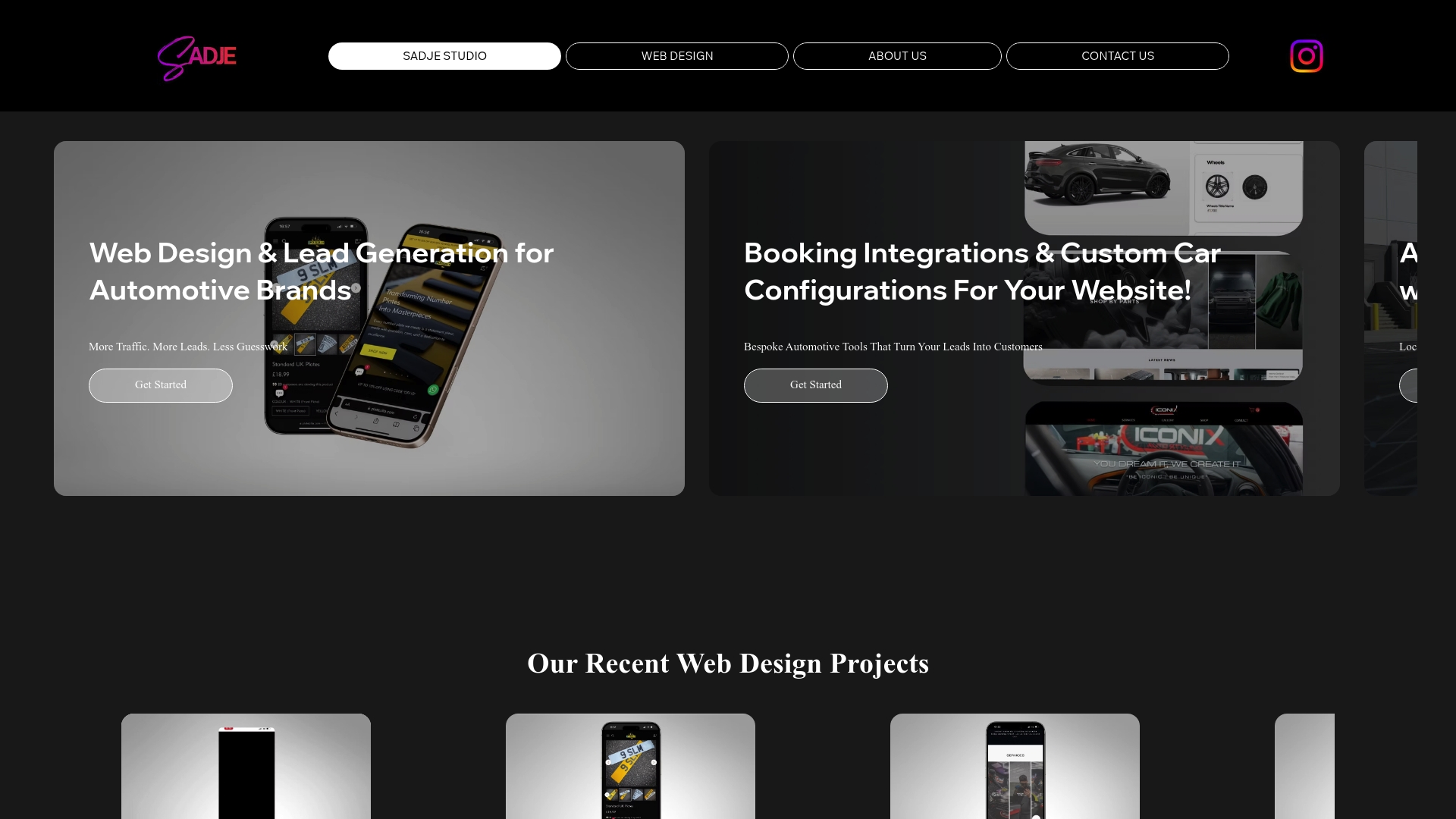
Partner with SADJE, a UK-based agency specialising in creating bespoke high-performance websites for car dealerships and garages. Benefit from cutting-edge features like 3D configurators, instant quote generators, and integrated booking systems that simplify customer engagement and maximise conversion. Visit SADJE today to transform your online presence, enhance your local SEO with car shop advertising, and implement lead-generation strategies designed to drive real results. Take action now to stay ahead in a competitive market and watch your dealership thrive.
Frequently Asked Questions
How do I audit my car dealership’s current digital presence?
To audit your car dealership’s digital presence, systematically review your website, social media profiles, and Google Business listing. Gather performance metrics on website loading speeds, mobile responsiveness, and user engagement to identify areas for improvement.
What key areas should I focus on when optimising my automotive website structure?
Focus on implementing a clear website architecture that includes logical category pages, comprehensive model landing pages, and descriptive URL structures. Ensuring each page has semantic HTML markup will help improve user experience and search engine visibility.
What advanced lead-generation tools can I integrate to boost customer engagement?
Integrate tools such as online appointment scheduling, trade-in calculators, and personalised e-brochure generators to enhance customer interaction. By reducing friction in the customer journey, you may see a significant increase in lead conversion rates.
How can I enhance my local visibility for car sales?
Enhance local visibility by optimising your Google Business Profile, creating geographically specific content, and engaging in local link-building initiatives. Focus on maintaining consistent business information across all platforms to improve local search credibility.
What KPIs should I monitor to measure the success of my automotive SEO efforts?
Monitor key performance indicators such as website traffic volume, conversion rates, keyword rankings, and user engagement statistics. Establish a detailed tracking framework to identify growth areas and continually refine your SEO strategies.
How often should I review my automotive SEO workflow?
Conduct quarterly reviews of your SEO workflow to adapt to changing customer needs and digital landscapes. Regular assessments will help you quickly implement necessary adjustments, ensuring your strategies remain effective.
Recommended
Comments