

Bespoke Website Design – Driving Growth in Automotive
- Feb 25
- 8 min read
Settling for a generic website can leave even the most trusted British automotive businesses overlooked online. Automotive customers expect smooth searches, rapid booking options, and digital experiences as refined as the vehicles on offer. Choosing bespoke website design gives business owners the power to stand out with custom-crafted platforms that match their individual goals, attract more leads, and support efficient customer bookings—offering far more than any off-the-shelf template.
Table of Contents
Key Takeaways
Point | Details |
Bespoke Website Design Offers Unique Solutions | Bespoke design provides complete customisation tailored to an automotive business’s specific needs, enhancing brand representation and user experience. |
Advanced Functionality is Essential | Integrating sophisticated features like dynamic inventory management and interactive tools can significantly streamline operations and engage customers. |
Consider Long-Term Objectives | When choosing between bespoke and template designs, evaluate scalability potential and the ability to evolve with changing business needs. |
Mitigation of Risks is Crucial | Establishing clear project guidelines, budgeting for contingencies, and planning for maintenance can help avoid common pitfalls in bespoke website development. |
What Is Bespoke Website Design?
Bespoke website design represents a sophisticated digital solution tailored exclusively for individual automotive businesses, moving far beyond standard template approaches. Unlike generic website templates, custom-crafted digital experiences are meticulously designed from scratch to reflect a brand’s unique identity and operational requirements.
At its core, bespoke website design involves creating an entirely original online platform built around a specific business’s precise needs. This approach differs dramatically from off-the-shelf solutions by offering:
Complete design customisation
Advanced functionality matching business workflows
Scalable architecture tailored to automotive sector requirements
Enhanced user experience specific to automotive customer journeys
Seamless integration with existing business systems
Automotive businesses choosing bespoke design gain significant strategic advantages. Hand-crafted websites provide granular control over digital presentation, allowing car dealerships, garages, and service providers to communicate their brand’s unique value proposition more effectively than standardised templates permit.

The development process involves close collaboration between web designers and automotive business owners, ensuring every digital element precisely matches operational goals. This might include custom booking systems, interactive vehicle configurators, or specialised lead generation tools uniquely engineered for automotive sales processes.
Key Differentiators of Bespoke Design:
Original coding from ground zero
Pixel-perfect brand alignment
Performance optimised for automotive websites
Maximum flexibility and future adaptability
Pro tip: Invest time in detailed requirement gathering before beginning your bespoke website design to ensure maximum alignment with your automotive business objectives.
Types and Variations in Bespoke Design
Bespoke website design encompasses several sophisticated design categories and approaches, each tailored to address unique automotive business requirements. Understanding these variations allows businesses to select the most appropriate digital strategy for their specific operational needs.
The primary variations in bespoke design can be categorised into distinct types:
Static Bespoke Design: Fixed content with minimal interactive elements
Dynamic Bespoke Design: Real-time content updates and interactive features
Responsive Bespoke Design: Adaptable layouts across multiple devices
Interactive Bespoke Design: Advanced user engagement mechanisms
Scalable Bespoke Design: Flexible architectures supporting business growth
Technological Foundations play a critical role in determining design variations. Web design categories are increasingly complex, offering automotive businesses unprecedented customisation potential. These technological variations allow for unique implementations like:
Custom vehicle configurator interfaces
Real-time booking and scheduling systems
Integrated customer relationship management tools
Advanced analytics and performance tracking dashboards
Personalised user experience pathways
Each design variation offers distinct advantages for automotive businesses. Static designs provide cost-effective solutions for straightforward informational websites, while dynamic designs enable complex interactions such as live inventory management, instant quote generation, and seamless customer communication channels.
Key Considerations for Design Selection:
Specific business model requirements
Target audience digital expectations
Budgetary constraints
Long-term scalability objectives
Integration capabilities with existing systems
Pro tip: Consult with web design professionals who specialise in automotive digital solutions to determine the most appropriate bespoke design variation for your specific business needs.
Core Features for Automotive Businesses
Automotive businesses require sophisticated digital platforms that go beyond traditional website design. Essential website features have evolved to create comprehensive digital experiences that drive customer engagement and streamline business operations.
Critical core features for automotive websites include:
Dynamic Vehicle Inventory Management
Interactive Vehicle Configurators
Seamless Booking and Service Scheduling
Advanced Finance Application Tools
Mobile-Responsive Design
Customer Review Integration
Advanced technological integrations have transformed how automotive businesses interact with potential customers. Intuitive website design now encompasses multiple sophisticated elements that support comprehensive customer journeys, from initial research to final purchase decisions.
Technological capabilities enable automotive websites to provide unprecedented levels of interaction and information. Modern platforms incorporate:
Real-time vehicle availability tracking
360-degree vehicle visualisation tools
Personalised finance calculators
AI-powered live chat support
Instant trade-in value estimators
Comprehensive vehicle specification databases
Customer experience remains paramount in digital automotive platforms. Websites must balance technical functionality with intuitive design, ensuring potential buyers can effortlessly navigate complex information while feeling supported throughout their purchasing journey.
Key Performance Indicators for Automotive Websites:
Page load speed
Mobile responsiveness
User engagement metrics
Conversion rate
Lead generation efficiency
Pro tip: Regularly audit your automotive website’s features and performance, ensuring technological capabilities align with evolving customer expectations and digital marketplace trends.
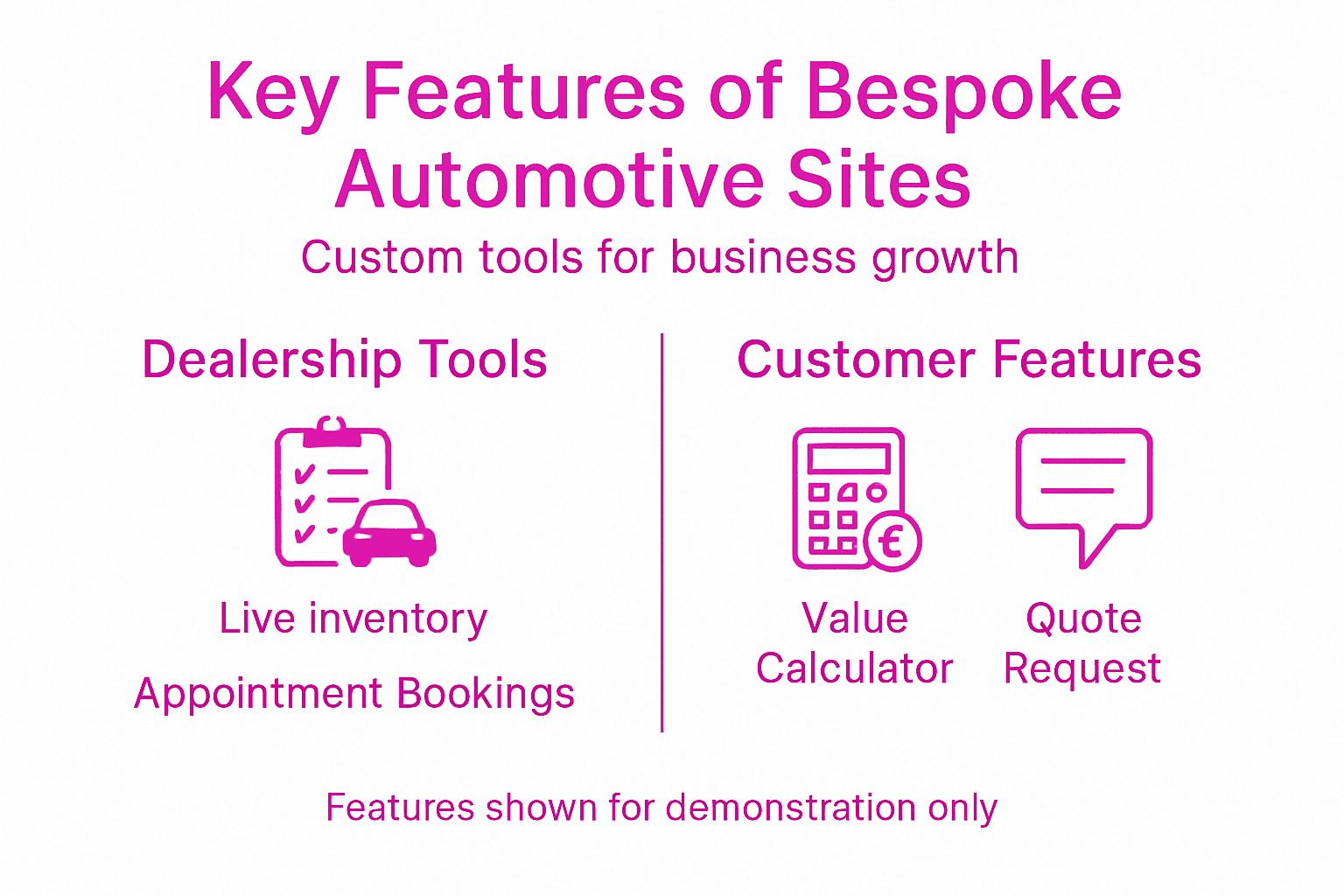
Integration of Lead Generation Tools
Successful automotive businesses are transforming their digital strategies through advanced lead generation techniques that seamlessly convert website visitors into potential customers. Modern lead generation tools have revolutionised how automotive businesses capture, nurture, and convert potential clients.
Key components of effective lead generation integration include:
CRM-Integrated Capture Forms
Live Chat Support Systems
E-Signature Capabilities
Automated Follow-up Mechanisms
Targeted Landing Pages
Social Media Lead Acquisition Tools
The strategic implementation of automotive lead generation technologies enables businesses to create sophisticated digital ecosystems that dramatically improve conversion rates. These tools work synergistically to reduce friction in the customer acquisition process, providing multiple touchpoints for potential buyers.
Technological innovations have transformed lead generation from simple contact collection to intelligent, data-driven interaction platforms. Modern automotive websites now incorporate:
Intelligent form pre-filling mechanisms
Personalised content recommendations
Instant quote generation tools
Real-time availability tracking
Seamless mobile interaction capabilities
Automated lead scoring systems
The integration of these tools requires a holistic approach that balances technological sophistication with user-friendly design. Successful implementations focus on creating smooth, intuitive pathways that guide potential customers effortlessly from initial interest to final purchase.
Critical Lead Generation Success Factors:
Speed of initial response
Quality of lead information
Personalisation of interactions
Multi-channel engagement
Continuous process optimization
Pro tip: Implement a robust analytics framework to continuously monitor and refine your lead generation tools, ensuring they evolve with changing customer expectations and technological capabilities.
Comparing Bespoke and Template Websites
The digital landscape for automotive businesses demands sophisticated online presence, with website design strategies playing a crucial role in determining competitive advantage. Understanding the fundamental differences between bespoke and template websites can significantly impact a business’s digital marketing effectiveness.
Key distinctions between bespoke and template websites include:
Customisation Level
Development Cost
Brand Uniqueness
Scalability Potential
Performance Capabilities
Long-Term Investment Value
Website design approaches fundamentally differ in their core philosophy. Template websites offer quick, budget-friendly solutions with predefined layouts, while bespoke designs provide tailored digital experiences meticulously crafted to reflect a brand’s unique identity and operational requirements.
Template websites present several inherent limitations for automotive businesses:
Restricted design flexibility
Generic visual presentations
Limited functionality
Potential SEO constraints
Reduced brand differentiation
Higher long-term maintenance costs
Bespoke websites, by contrast, enable automotive businesses to create distinctive digital platforms that precisely match their strategic objectives. These custom-built solutions offer enhanced user experiences, superior performance metrics, and the ability to integrate advanced technological features seamlessly.
Comparative Evaluation Criteria:
Initial development investment
Customisation capabilities
Scalability potential
Brand representation
User experience quality
Technical performance
Pro tip: Conduct a comprehensive digital audit of your current website to determine whether a template or bespoke approach best aligns with your automotive business’s growth strategy and technological requirements.
Here is a concise comparison of bespoke versus template websites for automotive businesses:
Evaluation Area | Bespoke Website | Template Website |
Brand Representation | Fully unique and branded | Generic and standardised |
Functionality | Customised business tools | Fixed, limited features |
Long-Term Value | High, scalable potential | May need frequent upgrades |
Implementation Timeline | Longer, collaborative | Rapid, minimal customising |
Cost Structure | Higher initial investment | Lower upfront cost |
Maintenance | Tailored ongoing support | Standard vendor updates |
Costs, Risks, and Mistakes to Avoid
Navigating the complex landscape of bespoke website design requires a strategic approach to managing potential project risks. Automotive businesses must carefully evaluate the financial and operational implications of custom digital solutions to ensure successful implementation.
Key financial and operational risks include:
Unexpected Budget Overruns
Extended Project Timelines
Technical Integration Challenges
Ongoing Maintenance Requirements
Security Vulnerability Exposure
Scalability Limitations
Risk management strategies are crucial for mitigating potential pitfalls in bespoke website development. Automotive businesses must anticipate and proactively address common challenges that can derail digital transformation initiatives.
Most critical mistakes to avoid during bespoke website development include:
Insufficient project scoping
Unclear performance objectives
Neglecting mobile optimization
Underestimating content creation complexity
Overlooking security protocols
Failing to plan for future updates
Successful bespoke website projects demand comprehensive planning, clear communication, and a thorough understanding of technological requirements. Businesses must invest time in detailed requirements gathering, selecting experienced development partners, and establishing robust testing and maintenance frameworks.
Critical Risk Mitigation Strategies:
Detailed project documentation
Comprehensive initial research
Phased implementation approach
Regular performance audits
Flexible design architecture
Continuous skills development
Pro tip: Allocate a contingency budget of 15-20% beyond initial project estimates to accommodate unexpected technical complexities and design iterations.
Below is a summary of common risks in bespoke automotive website projects and recommended mitigation actions:
Risk Area | Typical Challenge | Risk Reduction Action |
Budget Control | Costs exceeding estimates | Allocate contingency allowance |
Timeline Management | Delays in delivery | Use phased project milestones |
Technical Integration | Difficult systems connection | Select experienced developers |
Ongoing Maintenance | Unexpected ongoing needs | Plan a maintenance schedule |
Security | Increased vulnerability | Regular security testing and audits |
Accelerate Your Automotive Business with Bespoke Website Solutions
Every automotive business faces the challenge of standing out online with a website that truly reflects its unique brand and meets complex operational needs. This article highlights key pain points including limited customisation, poor lead generation, and the risk of costly delays or security vulnerabilities. With bespoke website design, you gain full control over functionality, superior performance optimisation, and seamless integration of essential tools like 3D configurators and booking systems.
At SADJE, we specialise in delivering tailored digital experiences that directly address these challenges. Our expertise lies in creating scalable, high-performance websites crafted specifically for garages, car dealerships, and automotive service providers. We understand the importance of combining advanced lead generation features with intuitive design to maximise customer engagement and conversion rates.
Explore our bespoke web development services and see how we can transform your digital presence into a powerful growth engine.
Ready to drive your automotive business forward with a customised website that stands apart from templates? Contact SADJE today to start building a scalable and performance-driven online platform designed exclusively for your brand. Do not let outdated digital solutions hold back your growth—act now for a competitive advantage in the automotive market.
Frequently Asked Questions
What is bespoke website design?
Bespoke website design refers to a custom-crafted digital solution tailored specifically for individual automotive businesses, offering unique design and functionality compared to standard templates.
What are the advantages of choosing a bespoke website for my automotive business?
Bespoke websites provide complete design customisation, advanced functionality suited to business workflows, and enhanced user experience, allowing for better communication of your brand’s unique value proposition.
How does bespoke website design differ from template websites?
Bespoke websites are fully unique and tailored to specific business needs, offering greater flexibility and scalability, while template websites provide limited customisation and features, making them less suitable for complex automotive business requirements.
What key features should I include in a bespoke automotive website?
Essential features for automotive websites include dynamic vehicle inventory management, interactive vehicle configurators, seamless booking systems, customer review integration, and mobile-responsive design to enhance user experience.
Recommended
Comments