

Advanced Web Design: Boosting Automotive Growth
- Feb 21
- 8 min read
Standing out in the competitive British automotive market demands more than a stylish website. Many dealership owners are discovering that interactive design elements and seamless mobile responsiveness can make all the difference in attracting leads and engaging tech-savvy customers. This article highlights the advanced features and proven strategies that help turn your online showroom into a dynamic hub for customer interaction and measurable sales growth.
Table of Contents
Key Takeaways
Point | Details |
Focus on User Experience | Modern automotive web design prioritises creating immersive, interactive, and personalised experiences that enhance user engagement. |
Leverage Advanced Technologies | Integrating AI, real-time data, and multimedia features is essential for creating dynamic platforms that streamline customer interactions. |
Ensure Mobile Responsiveness | Websites must be mobile-friendly to provide seamless access across all devices, increasing reach and potential customer conversion. |
Conduct Regular Audits | Frequent monitoring and evaluation of website performance and user feedback are crucial for optimising user experience and maintaining competitiveness. |
Defining advanced web design for automotive
Advanced automotive web design represents a strategic evolution beyond traditional static websites, transforming digital platforms into interactive, user-centric experiences. It goes far beyond mere aesthetic appeal, focusing instead on creating intelligent, responsive interfaces that seamlessly connect automotive businesses with potential customers.
At its core, advanced automotive web design integrates several critical technological components to deliver exceptional user experiences. Automotive web technologies now emphasise responsive design, interactive features, and real-time data integration. Key characteristics include:
Minimalist, intuitive navigation interfaces
Real-time vehicle configuration capabilities
Mobile-responsive design across all devices
Seamless integration of booking and inquiry systems
Advanced visual content like 3D vehicle renders
The fundamental shift in automotive web design involves moving from static information presentation to dynamic, interactive platforms. User experience has become paramount, with websites now serving as comprehensive digital showrooms that engage visitors through personalised, technology-driven interactions.
Interactive design elements are transforming how automotive businesses communicate online. Modern websites no longer simply display vehicle specifications; they offer immersive experiences where potential customers can explore, customise, and virtually interact with products before making purchasing decisions.
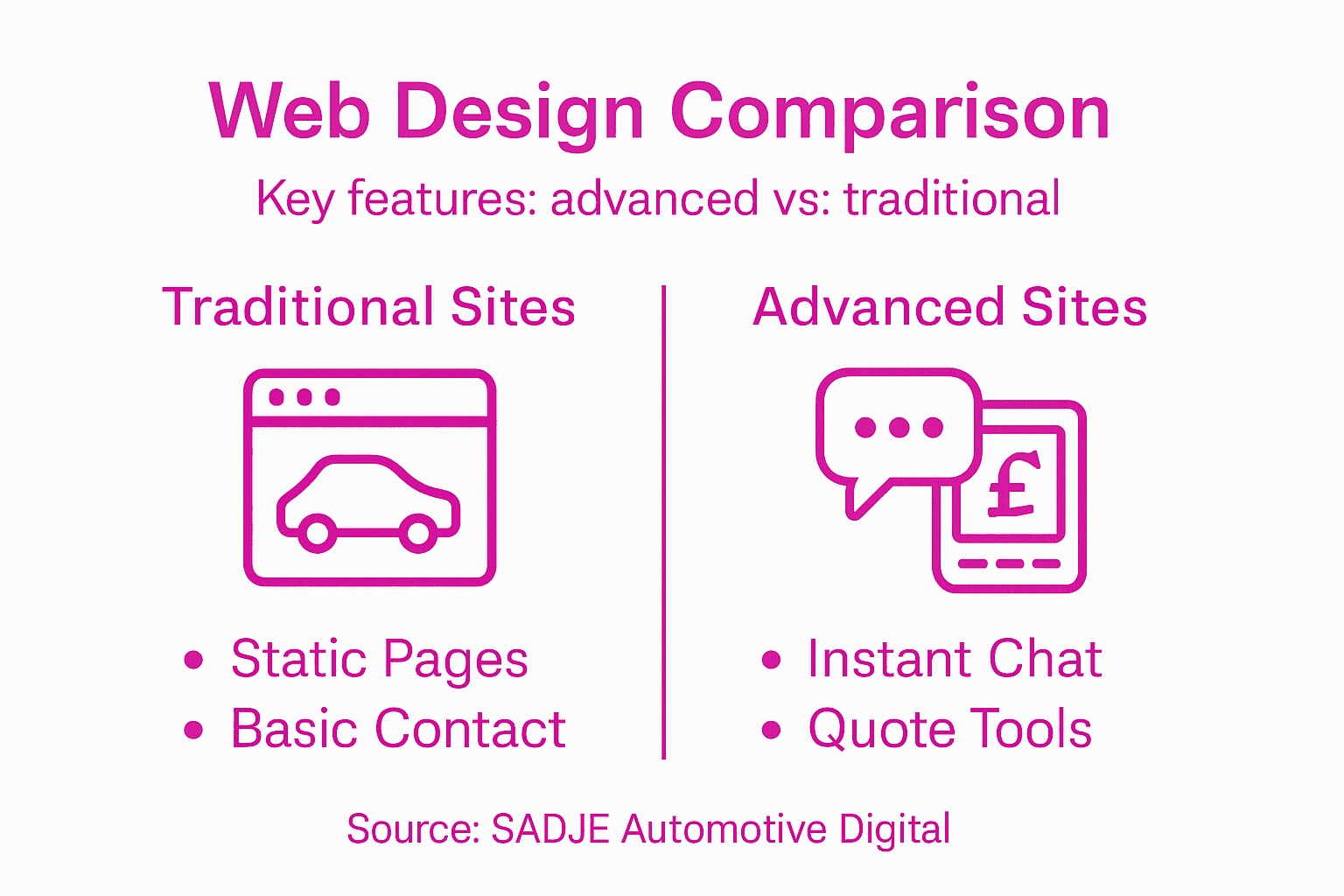
Technically sophisticated web platforms now incorporate advanced features like instant quote generators, live chat support, and seamless mobile responsiveness. These innovations ensure that automotive websites deliver not just information, but meaningful, engaging digital experiences that guide customers through complex purchasing journeys.
Pro tip: Invest in responsive design and interactive features that create frictionless user experiences, as these elements significantly improve customer engagement and conversion rates.
Core features and interactive capabilities
Advanced automotive websites have transformed from simple information repositories to sophisticated digital platforms that deliver immersive, interactive experiences. Modern automotive website features now encompass cutting-edge technologies designed to engage tech-savvy customers and streamline their purchasing journeys.
The core interactive capabilities of contemporary automotive websites can be categorised into several critical components:
Vehicle Configurator Tools
3D interactive car customisation
Real-time colour and specification changes
Instant price updates based on selected features
Advanced Visualisation Technologies
360-degree vehicle views
Virtual test drive simulations
Augmented reality vehicle previews
User Engagement Systems
Live chat support
Online financing calculators
Instant quote generation
Responsive design has become paramount in automotive web platforms, ensuring seamless experiences across smartphones, tablets, and desktop computers. These intelligent interfaces adapt dynamically to user devices, providing consistent and engaging interactions regardless of screen size or platform.
Interactive capabilities extend beyond visual presentations. Advanced website features now integrate sophisticated backend systems like customer relationship management (CRM) tools, enabling dealerships to track interactions, personalise communications, and streamline sales processes.
Technological innovations have fundamentally reimagined how automotive businesses connect with potential customers. Modern websites are no longer static brochures but dynamic, intelligent platforms that anticipate user needs, provide instantaneous information, and create compelling digital experiences that mirror the excitement of exploring new vehicles.
Here’s how key website features directly impact automotive business goals:
Website Feature | Practical Benefit | Business Value |
Real-time configurators | Enables instant car customisation | Boosts user engagement and conversions |
AI-driven lead scoring | Identifies high-potential buyers | Improves sales efficiency and outcomes |
3D/AR vehicle previews | Offers immersive product exploration | Enhances customer satisfaction and trust |
Mobile-responsive layout | Provides seamless access on any device | Expands reach and customer accessibility |
Integrated CRM systems | Tracks all customer interactions | Enables personalisation and retention |
Pro tip: Prioritise mobile-responsive design and integrate interactive features that provide immediate value, such as real-time pricing and configuration tools.
Specialised tools for lead generation
The landscape of automotive digital marketing has undergone a radical transformation, with advanced lead generation technologies providing unprecedented opportunities for automotive businesses to capture and nurture potential customers.
Specialised lead generation tools for automotive websites now encompass several critical technological capabilities:
Automated Visitor Tracking
Real-time website behaviour analysis
Anonymous company identification
Detailed visitor interaction mapping
Intelligent Lead Scoring
AI-powered prospect qualification
Predictive purchase likelihood assessment
Automated lead prioritisation
Engagement Optimization Tools
Personalised communication workflows
Targeted content recommendation engines
Automated follow-up scheduling
Artificial intelligence has revolutionised lead generation by enabling unprecedented levels of data-driven insights and personalisation. These sophisticated systems can now predict customer behaviour, understand purchasing intent, and create highly targeted engagement strategies that significantly improve conversion potential.
Lead generation software now integrates seamlessly with customer relationship management (CRM) platforms, creating comprehensive ecosystems that transform raw website traffic into qualified sales opportunities. By leveraging advanced analytics and machine learning algorithms, automotive businesses can develop more intelligent, responsive marketing strategies.
The most effective lead generation tools go beyond simple contact collection, offering holistic solutions that track, analyse, and nurture potential customers throughout their entire purchasing journey. These platforms provide granular insights into customer preferences, enabling automotive businesses to craft personalised experiences that resonate with individual buyer motivations.
Pro tip: Implement multi-channel lead tracking tools that provide comprehensive visibility into customer interactions across different digital touchpoints.
Best practices for automotive website success
Successful automotive websites require a strategic approach that balances technical performance with exceptional user experience. Best automotive website design principles focus on creating digital platforms that not only attract potential customers but also effectively convert their interest into tangible business opportunities.
Key best practices for automotive website success include:
Technical Performance
Lightning-fast page loading speeds
Full mobile responsiveness
Cross-browser compatibility
Secure HTTPS encryption
User Experience Design
Intuitive navigation structures
Clear, compelling call-to-action buttons
Streamlined booking and inquiry processes
High-quality, professional imagery
Content Strategy
Detailed vehicle information
Transparent pricing displays
Service and maintenance guides
Customer testimonial integration
Website accessibility remains a critical component of successful automotive digital platforms. Automotive website design strategies emphasise creating inclusive digital experiences that cater to diverse user needs, ensuring that potential customers can easily navigate and interact with the site regardless of their technological proficiency.
The most effective automotive websites transform traditional online brochures into dynamic, interactive platforms that guide customers through their purchasing journey. By integrating sophisticated tools like vehicle configurators, real-time pricing calculators, and seamless booking systems, businesses can create engaging digital environments that build trust and facilitate conversions.
Ultimately, successful automotive websites are those that prioritise user-centric design, technical excellence, and transparent communication. They understand that modern customers expect more than just information – they demand immersive, personalised digital experiences that simplify their decision-making process.
Pro tip: Regularly audit your website’s performance using analytics tools, focusing on user engagement metrics and conversion rates to continually refine and improve your digital platform.
Risks, costs, and common mistakes
Navigating the complex landscape of automotive web design requires a nuanced understanding of potential pitfalls and strategic risk management. Web design mistake prevention involves identifying and mitigating challenges that can undermine digital performance and customer engagement.
Common risks and costly mistakes in automotive website development include:
Technical Vulnerabilities
Inadequate cybersecurity measures
Slow page loading times
Poor mobile responsiveness
Inconsistent cross-browser compatibility
Design and Usability Errors
Cluttered, confusing navigation
Unclear calls-to-action
Inconsistent branding
Lack of intuitive user interfaces
Content and Functionality Gaps
Outdated vehicle information
Missing pricing transparency
Limited interactive features
Poor search engine optimization
Risk management in digital automotive platforms extends beyond technical considerations. Automotive manufacturing risk strategies emphasise proactive identification of potential development challenges that could compromise website effectiveness and business competitiveness.
Financial implications of website design mistakes can be substantial. Poor user experience, security vulnerabilities, and inefficient design can lead to significant customer abandonment, with potential revenue losses estimated at thousands of pounds annually for automotive businesses. The cost of rectifying these issues often far exceeds the initial investment in comprehensive, strategic web design.
Successful automotive websites require continuous monitoring, testing, and refinement. This approach involves regular performance audits, user experience assessments, and staying current with emerging technological standards and customer expectations. By adopting a proactive stance, businesses can minimise risks and maintain a competitive digital presence.
Pro tip: Conduct quarterly comprehensive website audits, focusing on performance metrics, user feedback, and potential security vulnerabilities to prevent costly design mistakes.
Comparing traditional and advanced approaches
The evolution of automotive web design represents a fundamental shift from static information repositories to dynamic, interactive digital experiences. Traditional automotive website designs primarily focused on presenting basic vehicle specifications, while advanced approaches transform websites into comprehensive, engaging platforms that anticipate and respond to user needs.
Key differences between traditional and advanced approaches include:
This comparison highlights how traditional and advanced automotive web design approaches differ:
Aspect | Traditional Websites | Advanced Websites |
Content Format | Text-based and static | Interactive and multimedia-rich |
Customer Interaction | Minimal or one-way | Personalised and dynamic |
Business Insights | Basic traffic data | Advanced analytics and AI-driven insights |
Sales Process | Separate from website | Online configuration and virtual sales tools |
Information Delivery
Traditional: Static, text-heavy content
Advanced: Interactive, multimedia-rich experiences
User Interaction
Traditional: Limited user engagement
Advanced: Personalised, AI-driven interactions
Design Philosophy
Traditional: Functional and informative
Advanced: Immersive and experiential
Technological integration represents the most significant divergence between traditional and advanced web design methodologies. Web design learning approaches highlight the importance of adopting more dynamic, responsive technologies that enable real-time customisation and engagement.
Advanced automotive websites leverage cutting-edge technologies to create more meaningful digital experiences. Artificial intelligence, machine learning, and sophisticated data analytics now enable websites to offer personalised vehicle recommendations, predictive pricing models, and interactive configurators that transform the online car-buying journey.
The transition from traditional to advanced approaches is not merely about technological sophistication, but about fundamentally reimagining how automotive businesses communicate with potential customers. Modern websites serve as comprehensive digital ecosystems that provide seamless, intuitive experiences across multiple devices and touchpoints.
Pro tip: Invest in modular, adaptable web design technologies that can evolve with emerging customer expectations and technological innovations.
Elevate Your Automotive Business with Advanced Web Design Solutions
The article highlights critical challenges automotive businesses face today, such as delivering dynamic, interactive user experiences, integrating real-time vehicle configuration tools, and implementing advanced lead-generation systems to boost customer engagement and conversion rates. If your website is struggling with slow loading times, poor mobile responsiveness, or limited interactivity, you risk losing valuable leads and falling behind competitors who embrace cutting-edge technologies.
At SADJE, we understand these challenges deeply. Our bespoke websites for garages, dealerships, and rental companies are crafted to incorporate powerful features like 3D configurators, instant quote generators, and seamless booking systems. By partnering with us, you gain a trusted ally who not only enhances your digital presence but also drives measurable growth through expert SEO, paid advertising, and analytics optimisation.
Discover how our tailor-made automotive web solutions can transform your online platform into an immersive, lead-generating powerhouse. Take control of your digital future today by visiting SADJE.
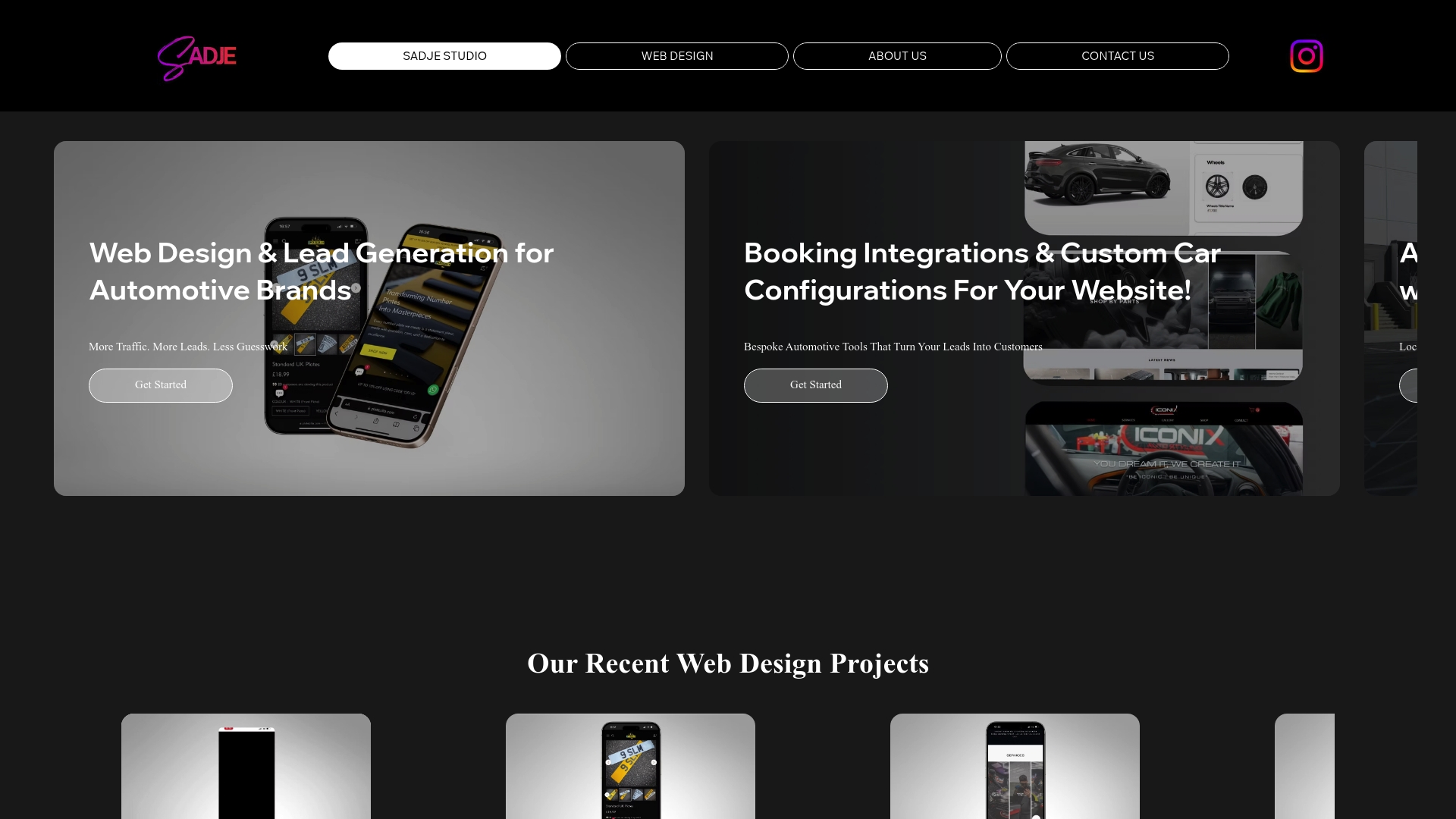
Ready to leave outdated static sites behind and engage customers with intelligent, responsive design? Contact SADJE now and start accelerating your automotive business growth through advanced web design crafted specifically for your unique needs. Explore our approach at SADJE and step confidently into the next generation of automotive digital marketing.
Frequently Asked Questions
What is advanced automotive web design?
Advanced automotive web design is a strategic evolution from traditional static websites, focusing on creating interactive, user-centric experiences that engage potential customers and deliver intelligent, responsive interfaces.
How do interactive features enhance user experience on automotive websites?
Interactive features, such as vehicle configurators and 3D visualisations, provide immersive experiences where customers can explore and customise vehicles, facilitating informed purchasing decisions and improving engagement.
Why is mobile responsiveness important for automotive websites?
Mobile responsiveness ensures that automotive websites function seamlessly across various devices, providing a consistent user experience that increases accessibility, engagement, and conversion rates.
What are some common mistakes to avoid in automotive web design?
Common mistakes include inadequate cybersecurity measures, slow loading speeds, poor mobile responsiveness, cluttered navigation, and outdated content, all of which can negatively impact user experience and lead to customer abandonment.
Recommended
Comments